Why does surviving burnout feel like impending doom?
Because it kinda is? At least to your nervous system. When you’re emotionally fried, spiritually dehydrated, and one passive-aggressive email away from setting your laptop on fire, you’re not being dramatic — you’re experiencing the slow-motion car crash also known as modern burnout. And no, a scented candle won’t fix it, Karen.
TL;DR – Surviving Burnout in a World on Fire
- Burnout feels like doom because it triggers your fight-flight-freeze response until even fun feels like an obligation.
- Coping with anxiety isn’t about silencing your brain; it’s about making friends with the chaos gremlin inside your skull.
- Overcoming overthinking takes structured strategies — and sometimes just screaming into a pillow.
- Self-compassion for the emotionally exhausted can start with simply not calling yourself ‘lazy.’
- Burnout recovery strategies that actually help are built on setting boundaries, not booking ten-day silent retreats.
Facing the Impending Doom of Burnout
Let’s not sugarcoat it. Surviving burnout feels like death by a thousand Slack notifications. You wake up more tired than when you went to bed. Your calendar triggers your fight-or-flight response. You think of quitting your job four times a day… minimum.
This isn’t just exhaustion. It’s emotional flatlining. Your joy receptors went offline weeks ago. Your tolerance for small talk is non-existent. Existing feels like a full-time job — and you’re not even getting dental.
Burnout hits high-functioning anxious people like a precision airstrike — because we’ve been white-knuckling through stress for years. The ‘impending doom’ is actually your body trying to make you stop.
Here’s what we often ignore: burnouts are not failures. They’re the check engine light. Keep driving and, boom — engine fire. Your brain, it turns out, wasn’t designed to operate like a caffeine-fueled productivity machine. Sorry, capitalism.
Finding Humor in the Depths of Anxiety
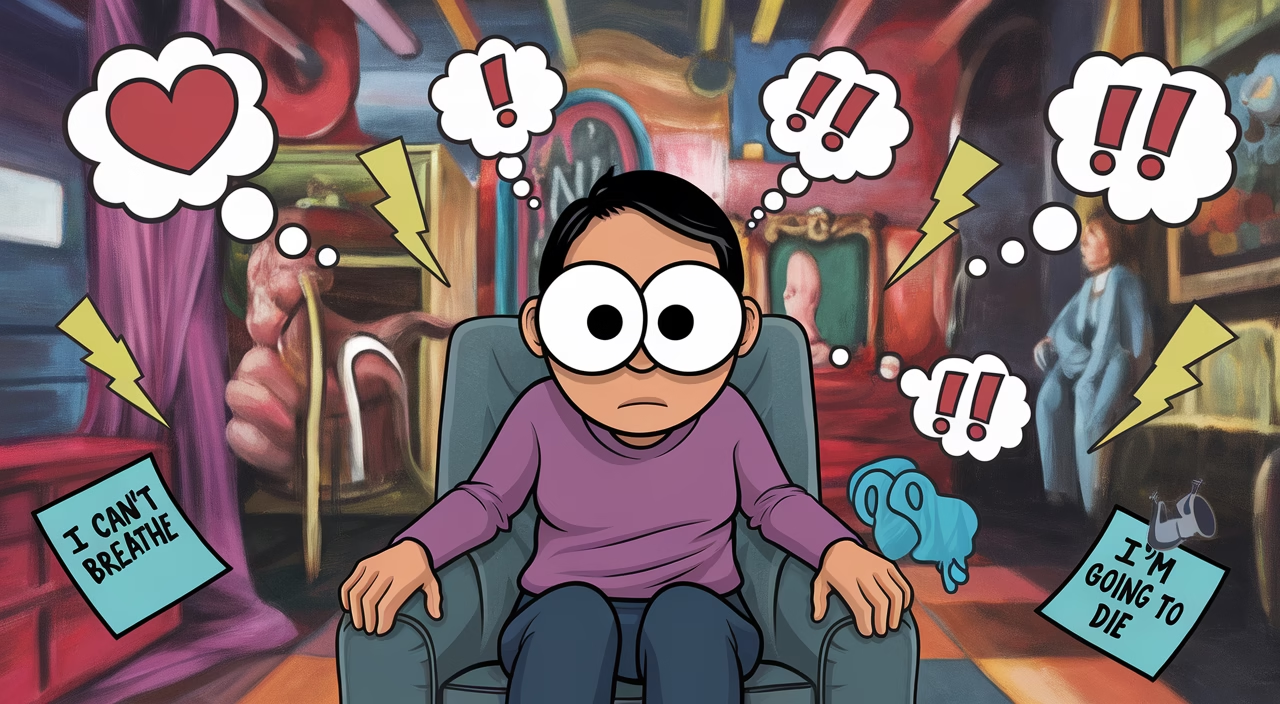
Coping with anxiety is like having a personal life coach who only whispers worst-case scenarios. It says, “What if you choke during that meeting?” “Did you lock the door?” “Everyone hates you – here’s a 3D PowerPoint.”
And yet, it’s also… hilarious? I once had a Thursday night panic spiral over picking the wrong oat milk. Anxiety has no chill and terrible comedic timing — which ironically makes it one of the few things that’s consistently funny.
Learning to laugh at your anxiety isn’t minimizing it. It’s surviving it. You’re not curing anything — you’re applying dark humour as a coping mechanism. Like emotionally numbing novocaine. Sometimes you need to look at your brain and go, “Wow, girl, you’re wildin’ today!”
So how do we find humour in an anxious mind?
- Give your anxiety a name. Mine’s called Janet. She’s exhausting and gossipy.
- Narrate your overthinking like a soap opera. “And in today’s episode of ‘Nobody Asked But I’m Still Spiraling…'”
- Talk back. “Thanks, brain, but I didn’t ask for a full-blown existential crisis today.”
Humour gives us distance — and with anxiety, even two inches of perspective is freedom.
Embracing Vulnerability: Strategies for Overcoming Overthinking
Overcoming overthinking isn’t ‘just being thoughtful.’ It’s mental quicksand. Once you’re in, every decision feels like it comes with the weight of the world. “Should I text back now, or wait 43 minutes so I seem chill?”
Let’s call it what it is: self-torture disguised as logic. But here’s the raw truth: overthinking is often fear masquerading in a lab coat. It sounds smart, but it’s actually scared — of rejection, of being wrong, of vulnerability. Especially that last one.
You can’t think your way out of overthinking. Trust me, I’ve tried. So what works for overcoming overthinking?
- Interrupt the loop. Move your body. Snap your fingers. Pat your head and rub your belly — do something weird to wake yourself up.
- Don’t trust every thought. Your brain lies. Often. Especially after 9 PM.
- Journal like a mess. Not pretty morning pages. Ugly, furious scribbles help drain the brain swamp.
- Expose the fear. Ask, “What am I really scared of here?” You’ll usually find the answer is “being seen.”
Overthinking feeds on perfectionism. Vulnerability kills it. So next time your brain spirals, choose to be messy. Be honest. Be brave enough to admit: I don’t know. I’m scared. I’m still showing up.
Dealing with Internal Chaos Without Losing Your Mind
The chaos isn’t going away. That’s not the goal. You can’t organize your way to mental health. Ask any recovering perfectionist — me, I’m any.
Dealing with internal chaos is the soundtrack of anxious brains. You’re not broken. You’re overstimulated, underslept, and probably underfed. And yeah, making twelve to-do lists isn’t helping.
Here’s how we cope without disassociating entirely:
- Radical honesty. Just admit: “I am not okay.” It’s terrifying — and also deeply, weirdly freeing.
- Break your chaos into chunks. You can’t tackle life. But maybe you can send one email. Fold two shirts. Cry in the bathtub. That counts.
- Stop managing emotions like projects. You don’t need a Google Doc. You need a hug. Possibly from yourself.
- Accept it’s not linear. Healing looks like three good days, then spontaneously sobbing over a TV commercial. All valid.
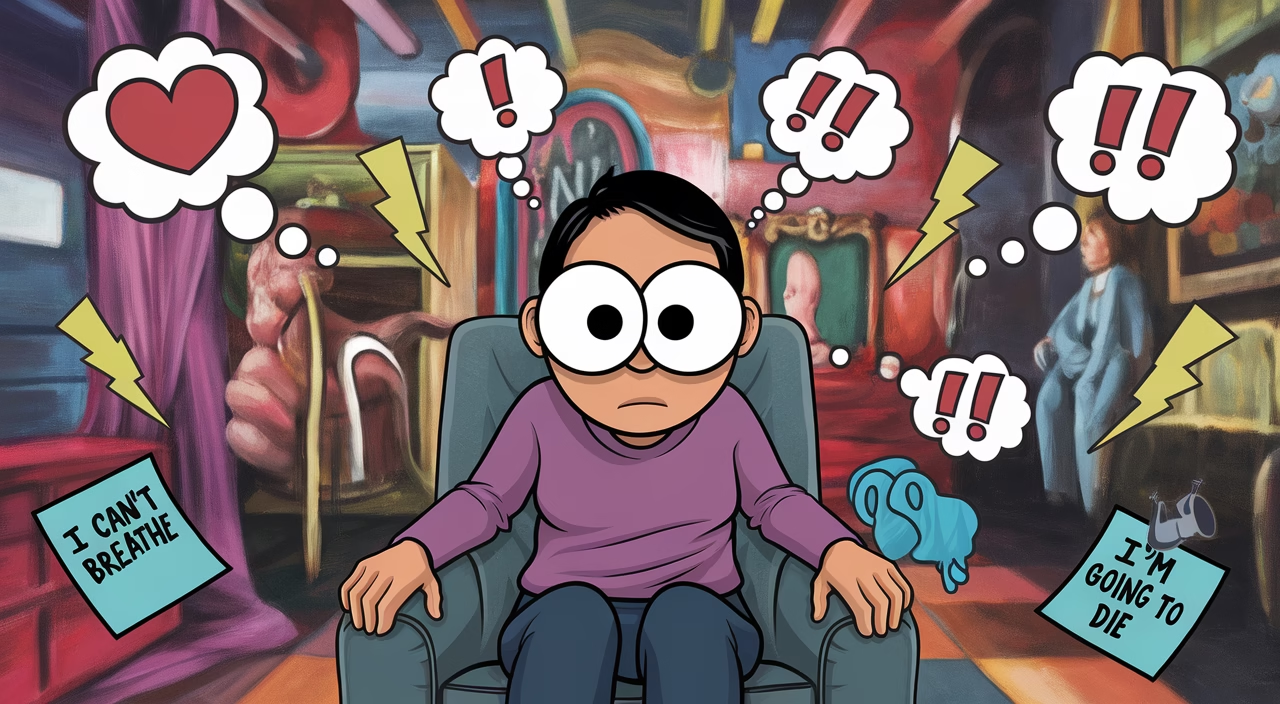
Think self-compassion for the emotionally exhausted is weak? Says the voice in your head that’s been bullying you since childhood. Emotional exhaustion relief demands softness, not more grind.
You don’t fix burnout by becoming more productive. You fix it by becoming more human.
Try this radical experiment: treat yourself like someone you love.
Oops — already hard, huh?
But seriously. If your friend said, “I feel empty and can’t stop crying at memes,” would you tell them to hustle harder? No. So why do you tell that to yourself?
Self-compassion for the emotionally exhausted doesn’t mean giving up. It means recognizing you’re a carbon-based organism with limits — not a machine cursed to optimize forever.
Try these practices:
- Say kind things out loud — even if you don’t believe them yet. “I deserve rest.” “This moment is hard, and I’m allowed to struggle.”
- Let yourself off the hook. You’re not lazy for needing a nap. You’re healing. Let that be enough today.
- Be unproductive on purpose. Schedule nothing. Sit in silence. Pet your cat. Let the world spin without you.
Self-Care for the Emotionally Drained: Tips for Surviving Burnout
Forget the rom-com version of self-care for the emotionally drained — you know, the one with face masks, wine, and an immaculate bathtub. Real self-care? Looks more like paying your credit card minimum and washing your bedding for the first time in weeks.
Here’s the raw list of actual burnout recovery strategies — not the influencer version:
- Hydrate. Like, with water. Not espresso shots.
- Eat something that grew from the earth.
- Cancel non-essential plans. You’re allowed.
- Find a no-bullsh*t therapist if you can.
- Scream-cry into a blanket. No shame.
- Ask for help. Even if your pride hates it.
- Lower the bar. Then lower it again. Celebrate brushing your teeth.
In short, surviving burnout means letting go of the version of yourself that never needed help, never failed, never cried in the work bathroom. That version was a mirage. You’re real now. Welcome back.
Final Thoughts
Surviving burnout is messy. Chaotic. Sometimes deeply ridiculous. But it’s also incredibly humanizing. You don’t come out of it a better person — you come out of it a realer one. One who knows how to say no. How to sit in discomfort. How to laugh at your spirals and still find your way home.
If you’re navigating anxiety, overcoming overthinking, emotional numbness, or that vague sense of existential dread… you’re not broken. You’re burning out in a burning world. But you’re not alone — not even close.
Frequently Asked Questions
- What are early signs of burnout?
Constant fatigue, cynicism, sense of apathy, emotional numbness, and difficulty concentrating are major red flags. - Can burnout look like depression?
Yes. Burnout and depression often overlap. But burnout usually improves with rest and environmental changes, while depression may require more targeted intervention. - How long does burnout recovery take?
It varies. For some, it takes weeks. For others, months or more. It depends on your awareness, support system, and rest. - Why do millennial workers burn out faster?
High pressure, financial instability, and toxic hustle culture contribute. Also: the internet never turning off. That’s fun. - Is it okay to take a break from everything?
Absolutely. Rest isn’t a reward. It’s a requirement. - Can you be high-functioning and still burned out?
100%. Many of us perform well externally while internally collapsing. It’s sneaky. And brutal.