

Emotional burnout doesn’t always scream—it sometimes sighs, hides, and posts ironic memes at 2 a.m. This comprehensive guide unpacks the psychology behind the fear of being truly seen and vulnerable. Through dark humor and honest self-reflection, we explore how overthinking becomes your default coping mechanism, where vulnerability meets anxiety, and how to find genuine hope in chaos. If you’ve ever spiraled into overthinking, analyzed a text for hours, or feared becoming a shadow of your dreams, this article speaks directly to you. We’ll explore proven strategies for coping with emotional burnout, what authentic self-reflection actually looks like, and how to navigate internal chaos with humor and hope. You’ll discover practical approaches rooted in real experience, not just feel-good platitudes. Because healing isn’t Instagram-pretty—it’s messy, absurd, and beautifully human.

How to Embrace Chaos When Anxiety and Burnout Are Eating You Alive
In a world where ‘good vibes only’ feels like a personal attack, embracing chaos isn’t weakness — it’s weirdly empowering. This isn’t another ‘just breathe and meditate’ self-care sob story. We’re talking real burnout, paralyzing overwhelm, and anxiety so thick it could be bottled and sold as artisanal panic. Packed with raw insights and dark humor, this article is a reality-check for the emotionally exhausted. Learn how coping mechanisms like self-compassion might save you from Googling ‘how to disappear tastefully’, and why finding humor in chaos might be your weirdest, bravest act of self-preservation yet. TL;DR: Welcome to the messy middle where vulnerability meets survival and sometimes, that’s enough.

Bad Day vs Mental Crash: How to Tell the Difference and Cope with Burnout
Struggling to tell the difference between a garden-variety bad day and a mind-erasing mental crash? Welcome to the club. In this brutally honest and darkly funny guide, we unpack the real signs of emotional burnout disguised as everyday stress. Learn how embracing chaos (yeah, it’s not just a Twitter aesthetic) can actually help you navigate anxiety, manage overthinking, and spot when things are spiraling past the ‘meh, I’m fine’ zone. From coping with anxiety through laughter to accepting imperfections with a side of sarcasm, this article delivers candid insights for high-functioning anxious millennials. TL;DR: If you’ve ever cried in the bathroom at work and called it meditation, this one’s for you.

How Embracing Chaos Helps Overthinkers Manage Anxiety and Recover from Burnout
In a world where every second Instagram therapist is yelling at you to ‘just breathe’ or ‘practice gratitude,’ here’s a painfully real confession: sometimes it’s chaos that saves us. Chaos Connoisseurs: Embracing the Messiness of Overthinkers dives deep into what it really means to cope with internal chaos when you’re burned out, emotionally drained, and plagued with high-functioning anxiety. This isn’t the kind of article that sugarcoats hard truths. It’s a gritty, vulnerable, occasionally dark-humored guide to managing the very real mess of your anxious brain.
Instead of telling you to meditate your way to zen (eye roll), we explore how a little healthy dysfunction can be the bridge to self-compassion. We unpack the emotional whiplash of overthinking, how to narrate your own chaos with humor, and why your internal dumpster fire isn’t proof of failure—it’s evidence of resilience.
By embracing emotional chaos instead of resisting it, you’re not just managing anxiety or recovering from burnout—you’re learning to live (and laugh) in the middle of it. Read on if you’ve ever felt like the only person who can’t find ‘balance’ and are secretly tired of pretending you’re okay. Spoiler: You’re not alone—and this article has your name written all over it.

How to Stop Taking Everything Personally: 7 Psychology-Backed Methods That Actually Work
If you’re constantly saying, “Why do I take everything so personally?”—you’re not alone. As high-functioning anxious overthinkers, we tend to spiral anytime someone looks at us sideways or sends a one-word reply. It’s exhausting, isn’t it? But here’s the real talk: it’s not about being ‘too sensitive’. It’s about emotional burnout, mental exhaustion, and a learned belief that we have to take everything on as our fault. This vulnerable, darkly humorous post dives into how to stop taking everything personally using psychology-backed methods—no toxic positivity, no BS. We explore real strategies rooted in self-awareness, boundaries, and emotional reframing to help you break the exhausting cycle of over-identifying with every sigh, side-eye, and Slack message. Whether you’re fighting inner chaos or just looking for hope in mental exhaustion, this guide will help you stop bleeding energy over things that probably aren’t even about you in the first place—and reclaim your calm, one sarcastic eye-roll at a time.

Walking With No Purpose: Your Ultimate Mental Reset for Overthinking and Burnout
If you’re a burnt-out creative wondering if you’re about to spontaneously combust or just cry into your overpriced cold brew, you’re not alone. We dive headfirst—sarcasm helmet on—into embracing your inner chaos, coping with overthinking, and navigating anxiety with raw honesty and a touch of dark humour. From emotionally numb wander-walks to mastering the art of doing nothing with flair, this guide explores how walking with no purpose can hit the reset switch on your mental hard drive. Embracing your inner chaos doesn’t mean becoming a mess—it means owning it stylishly (or sweatpants-ily). Learn authentic self-reflection tactics, real-life strategies for managing burnout, and why sometimes the most productive thing is abandoning productivity entirely. Finding humour in chaos might just become your new superpower.

How Embracing Imperfection Instantly Stops Procrastination (The Surprising Habit That Actually Works)
Recovering from perfectionism isn’t a glow-up montage — it’s more like crawling out of a glittery dumpster fire while laughing at the absurdity of it all. Embracing imperfection reveals how this vulnerable strategy doesn’t just reduce anxiety — it instantly interrupts procrastination at the root. Whether you’re deep in burnout, stuck in imposter syndrome, or just emotionally unavailable to life’s endless checklists, this honest, no-BS guide walks through the REAL mental shifts needed to stop waiting for ‘perfect’ and just begin. Learn how to reframe failure, find humor in the daily mess, and use authentic self-care practices to gently claw your way back to sanity. If you’ve had it with toxic positivity but aren’t quite ready to give up completely, this is your permission slip to suck at something today — and survive anyway.

How to Get Things Done During Mental Health Burnout (When You Want to Do Nothing)
Mental health burnout feels like your soul clocked out but forgot to tell your body. If you’re stuck doomscrolling, reeking of dry shampoo, and swapping your dreams for deadlines, you’re not alone. This darkly funny guide breaks down how I (sort of) keep it together when every cell in my body is screaming ‘nap!’ Featuring brutally honest advice, humor-infused coping mechanisms for burnout, and self-care tips for high-functioning anxious people, this article is for any overachiever who’s out of gas but still pretending to drive. Learn authentic ways to deal with emotional exhaustion and anxiety, find hope in chaos, and maybe even laugh through the breakdown. You might be functioning — but barely. Welcome.

Why Some People Are Naturally Motivated to Exercise (And How You Can Be Too)
Some people leap out of bed for a sunrise jog, while the rest of us hit snooze like it’s a competitive sport. Why are certain people naturally more motivated to exercise? Turns out, it’s not just about willpower or guilt. This article unpacks the psychological, biological, and emotional reasons behind movement motivation. We’ll explore everything from dopamine-driven personalities to trauma-informed exercise habits. Get ready for brutally honest insights, science-backed explanations, and raw encouragement for the burned-out (and thoroughly unmoved). Learn strategies like anxiety management, self-care tips, and mindfulness practices that can make movement feel less like punishment and more like relief.
Whether you’re a treadmill avoider or someone who romanticizes yoga but still cries in savasana, this guide is here to validate your journey and offer darkly funny, real-life coping strategies. Welcome to the art of finding hope (and a little sweat) in the midst of chaos.
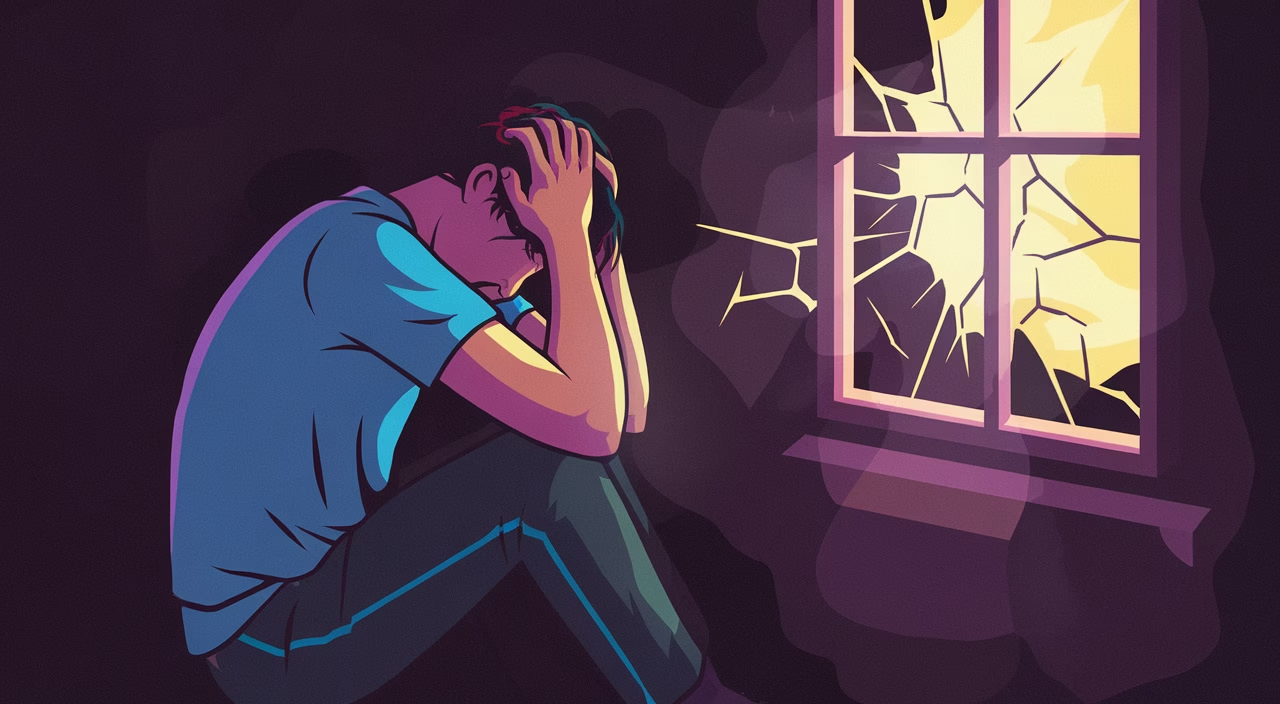
Embracing Burnout: What to Do When Your Brain Clocks Out Before You Do
If you’re a high-functioning anxious creative silently unraveling inside, this is for you. ‘Embracing Burnout: What to Do When Your Brain Clocks Out Before You Do’ explores what it truly means to hit emotional rock bottom while still keeping up appearances. It’s about embracing burnout—not glorifying it, but owning it—and how you can begin to crawl out of the overwhelm by understanding coping strategies for high-functioning anxiety, self-care for burnt-out creatives, and finding hope in chaos. With raw honesty and a splash of dark humour, this guide is your pocket-sized therapist when your brain is too worn out to Google another ‘ten-step recovery plan’. You’ll learn why overthinking can gaslight your inner peace, where emotional exhaustion hides in plain sight, and how overcoming self-doubt and perfectionism could be your greatest act of rebellion. TL;DR? You’re not broken. You’re burnt. And acknowledging that is the beginning of something better.