Why Do I Rehearse Conversations That Never Happen?
Because your brain is a 24/7 immersive chaos simulator with no off switch, and coping with anxiety means finding creative ways to process emotional turmoil.
- Quick TL;DR:
- ✔ Rehearsing fake conversations is your brain’s twisted but functional way of managing anxiety.
- ✔ Overthinking can feel like productivity, but it mostly just drains your soul.
- ✔ Dark humor and honesty can help you embrace your chaos instead of being consumed by it.
- ✔ Burnout often disguises itself as apathy or “I’m fine.” (Spoiler: you’re not.)
- ✔ Self-reflection and creative coping mechanisms make the internal screaming slightly more melodic.
- ✔ Embracing vulnerability isn’t weak—it’s the real flex.
Embracing Chaos with Dark Humour
If your brain were a Netflix genre, it would be “existential dread meets slapstick.” There’s something deeply bizarre—and weirdly comforting—about crafting entire arguments you’ll never have, just in case. Like, who exactly are you prepping this TED Talk for at 2am? Your childhood nemesis? Your boss? God?
We use dark humor as a life raft in the mental tsunami. That snippy retort you came up with in the shower? It probably saved you from crying in the toothpaste aisle again. Humor is armor when dealing with overthinking and anxiety—it’s also a weapon against emotional turmoil. Sometimes it’s just gibberish you mutter in traffic so you don’t shriek at the next red light.
Embracing chaos isn’t about becoming okay with inconsistency—it’s about realizing you’re already a masterpiece of contradiction and leaning all the way in. You’re not broken. You’re just complicated, spicy soup. And honestly? Soup is comforting as hell.
Coping Strategies for Anxiety and Burnout
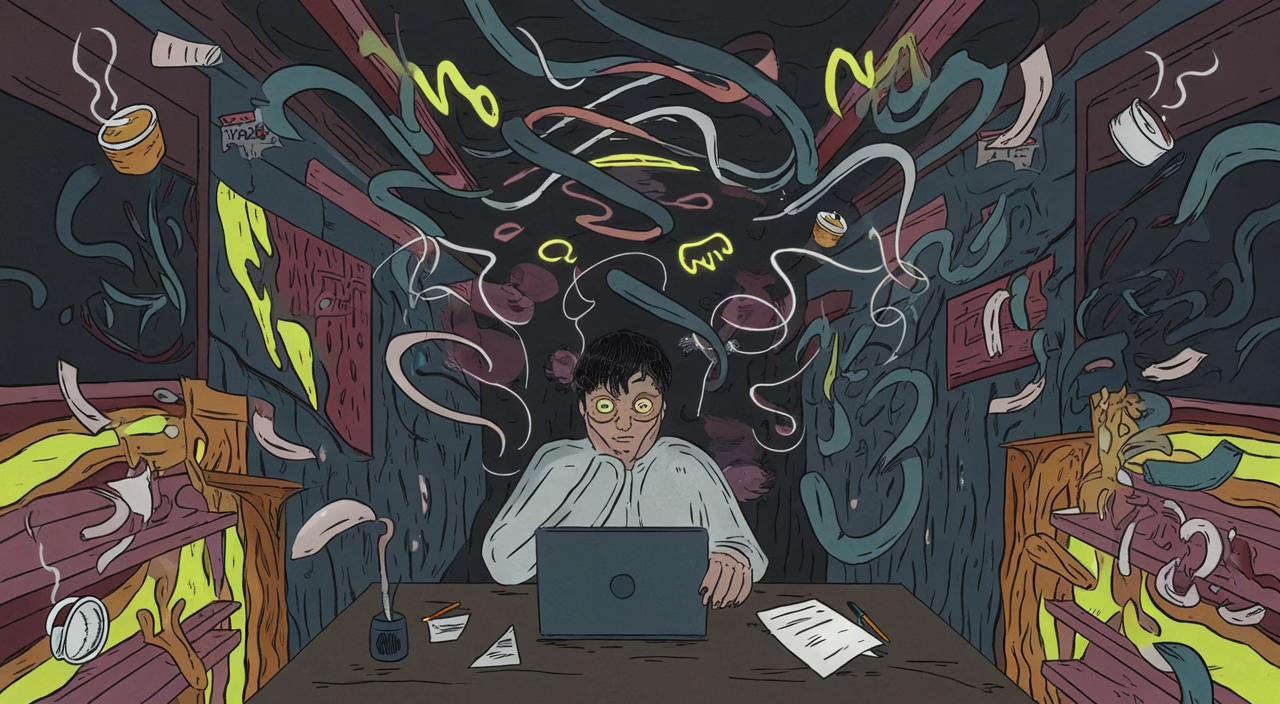
If burnout had a Tinder profile, it would say: “Emotionally unavailable, always tired, enjoys cancelling plans.” Overcoming burnout isn’t just about being tired—it’s bone-deep exhaustion that your caffeine or cute productivity app cannot fix. The solution isn’t pushing harder. It’s surrendering smarter.
Here’s what actually works when you’re coping with anxiety and burnout in the emotional blender and can’t hit pause:
- Tiny Creative Acts: Your brain wants to solve problems. Give it something low-stakes. Doodle something dumb. Write angsty poetry. Rearrange your furniture like you’re running from a crime.
- The Anxiety Iceberg Theory: Most of managing emotional turmoil is invisible. So stop trying to fix what’s “wrong” and ask what below-the-surface truth you’re avoiding. (Hint: it usually involves a childhood wound. Yay!)
- The “Nothing is Real” Perspective: Remind yourself that this world is weird, unpredictable, and out of your hands. Comic relief, not control, will save you from dealing with overthinking.
- Breathe Like You’re a Fraud: Box breathing is great until you think you’re not doing it perfectly and spiral. Try the “mediocre inhale” method—just get air in. Congrats, you lived another minute.
The thing people don’t tell you is that managing emotional turmoil doesn’t mean eliminating it. It means carrying it without letting it crush your soul like a rogue fridge.
Finding Hope in the Darkness
We hate to be the ones to say this, but hope isn’t something that shows up in a glittery bottle labeled “You’re doing amazing sweetie.” It often arrives like a stray cat: feral, suspicious, and only visible in the periphery of your despair.
Here’s the plot twist about coping with anxiety… hope doesn’t grow in the light. It grows in the compost pile of your emotional breakdown. The days you felt like soggy bread? Yep. That’s the breeding ground for meaning. And not because suffering is noble—but because you showed up anyway.
Finding hope while dealing with overthinking and emotional chaos does not mean being toxically positive. It means noticing the absurd, tiny wins that your anxiety tried to downplay:
- You replied to that one email you’ve been avoiding for 16 days? Practically a Nobel Peace Prize in our world.
- You laughed for five seconds today? That’s rebellion against emotional turmoil.
- You didn’t ghost your therapist this week? Iconic.
So if you’re waiting for a big, life-affirming revelation while overcoming burnout, here’s one: Hope is quiet. It doesn’t shout. It whispers, “Do it anyway.”
Self-Reflection: Embracing Vulnerability
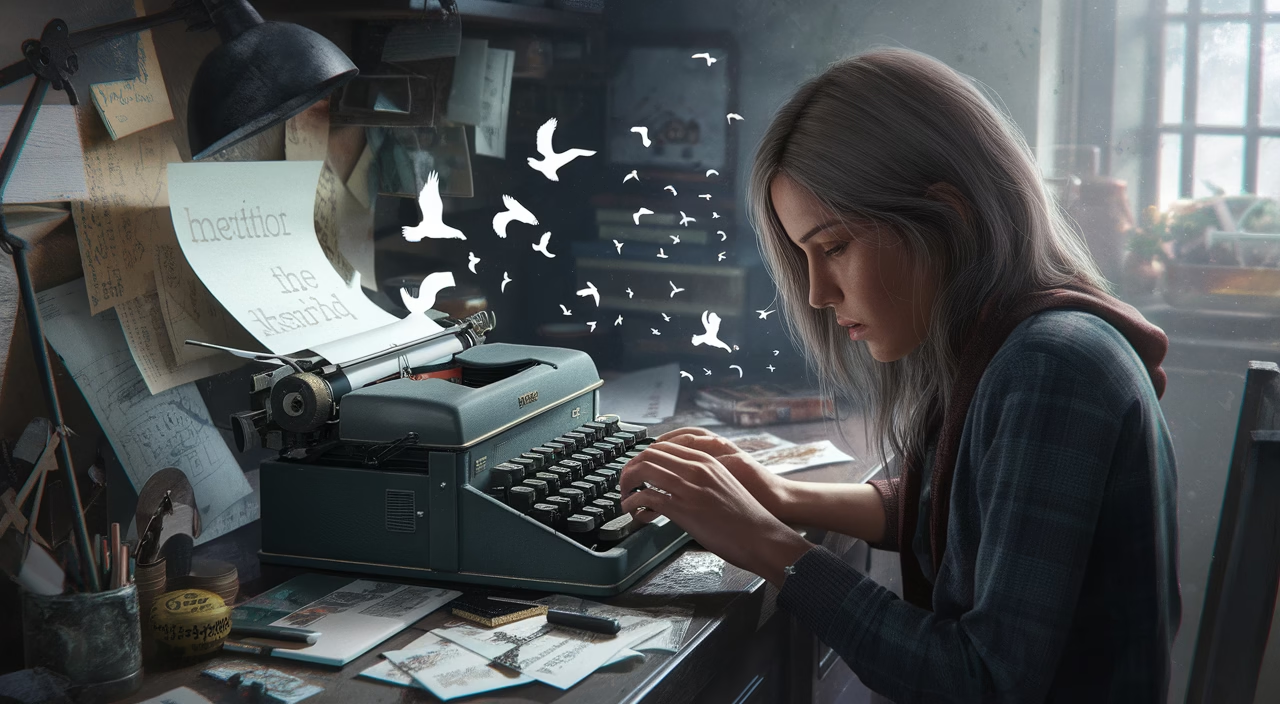
Vulnerability is like showing up to a knife fight in a bathrobe. Which is also exactly how we feel showing up to real life some days. But here’s what we’ve learned: Putting on armor every day while managing emotional turmoil is exhausting. Vulnerability may feel like weakness, but it’s the only path to actual connection—not just performing your personality for survival.
We say, “I’m fine” with all the sincerity of an alien trying to mimic human emotion. But trying to outrun your own emotional space trash while dealing with overthinking guarantees one thing: glorious internal combustion.
Let people see weird, messy, beautiful fragments. Let them know when you rehearse arguments with your shampoo bottle while coping with anxiety. That radical honesty? It cuts through isolation and makes space for real, squishy, flawed, alive connection.
Here’s a permission slip: You’re allowed to be tired, excited, anxious, avoidant, and hopeful all at once. Emotional chaos is not a malfunction; it’s being human with the safety off.
Overcoming Overthinking with Creativity
Dealing with overthinking: the anxiety-soaked hobby where you spiral through fifty worst-case scenarios before breakfast. You don’t think. You overthink. Chronically. Relentlessly. Congratulations, your brain is basically a conspiracy theorist with a side hustle in emotional sabotage.
But here’s the plot twist when coping with anxiety: Overthinking and creativity are evil twins. They’re both fueled by imagination. But creativity comes with an output. Overthinking just loops like a cursed theme park ride.
So what can you do? Hijack overthinking while managing emotional turmoil. Turn it into art. Acknowledge that your brain is going to process things anyway, so it might as well make something weird and wonderful in the process. Paint it. Write it. Scream it into a kazoo if you have to.
Some of the best poetry, songs, novels, and films started as imagined conversations too painful to speak out loud. So yeah, you’re not just spiraling—you’re drafting. You’re workshopping Pain: The One Person Show. Sell tickets. Own it.
Frequently Asked Questions
- Why do I rehearse fake conversations constantly?
Because it gives you a false sense of control. It’s your anxiety pre-playing possible rejection or confrontation as a shield against surprise pain. - Is overthinking an actual coping mechanism?
Technically yes—just an exhausting and inefficient one. It’s your brain’s way of trying to predict threats and avoid danger. - How do I know if I’m burnt out or just lazy?
If you once cared deeply but now feel numb, detached, or dread simple tasks, chances are—it’s burnout, not laziness. - Can all this chaos actually be useful?
Absolutely. Your inner mess is fertile ground for self-awareness, resilience, and creative gold. The work is finding structure without smothering your spark. - What role does creativity play in healing?
Creativity bypasses logic and accesses emotion. It lets pain breathe without making it perform. It’s expression disguised as survival. - Why does vulnerability terrify me?
Because it strips away your emotional armor and invites others to see you. But it’s also what heals alienation and invites real connection. - How can I keep laughing through all this?
Reframe humor as rebellion. Laughing is not denying pain; it’s staring at reality, flipping it the bird, and living to tell the joke.