Why do I avoid important tasks when I’m clearly drowning in burnout?
Short answer: because your brain is running Microsoft Windows circa 1998 and trying to open 47 tabs at the same time. Long answer: **mental exhaustion** messes with your executive function, which is the part of your brain in charge of prioritizing tasks, regulating emotions, and remembering whether you ate today. When you’re mentally exhausted, your brain can’t tell the difference between writing a report and wrestling a grizzly bear. So, it just… does nothing.
TL;DR
- Mental exhaustion drains your ability to function and makes adulting feel like hiking uphill… in lava.
- Important tasks become terrifying because burnout breaks your brain’s motivation system.
- Classic advice like “just take a break” sounds great until you forget how leisure works.
- Coping strategies work best when they’re funny, manageable, and not condescending.
- Work-life balance isn’t a goal—it’s a trap set by time gremlins with Outlook calendars.
Let’s be honest. If someone tells you “just rest more” one more time, you might throw your ergonomic chair across the room (if you had the energy). Creative burnout doesn’t come in neatly labeled stages—it sneaks in wearing your favorite hoodie and slowly steals your will to function.
And yet, here we are. Still working — mostly out of obligation, partly because if we stop, we might have to think. Which sounds worse.
**Mental exhaustion** looks like forgetting what day it is, being allergic to Slack notifications, and crying because you dropped a spoon. If you’re here trying to find **coping strategies** that don’t involve starting a kombucha farm in the woods, you’re in the right place.
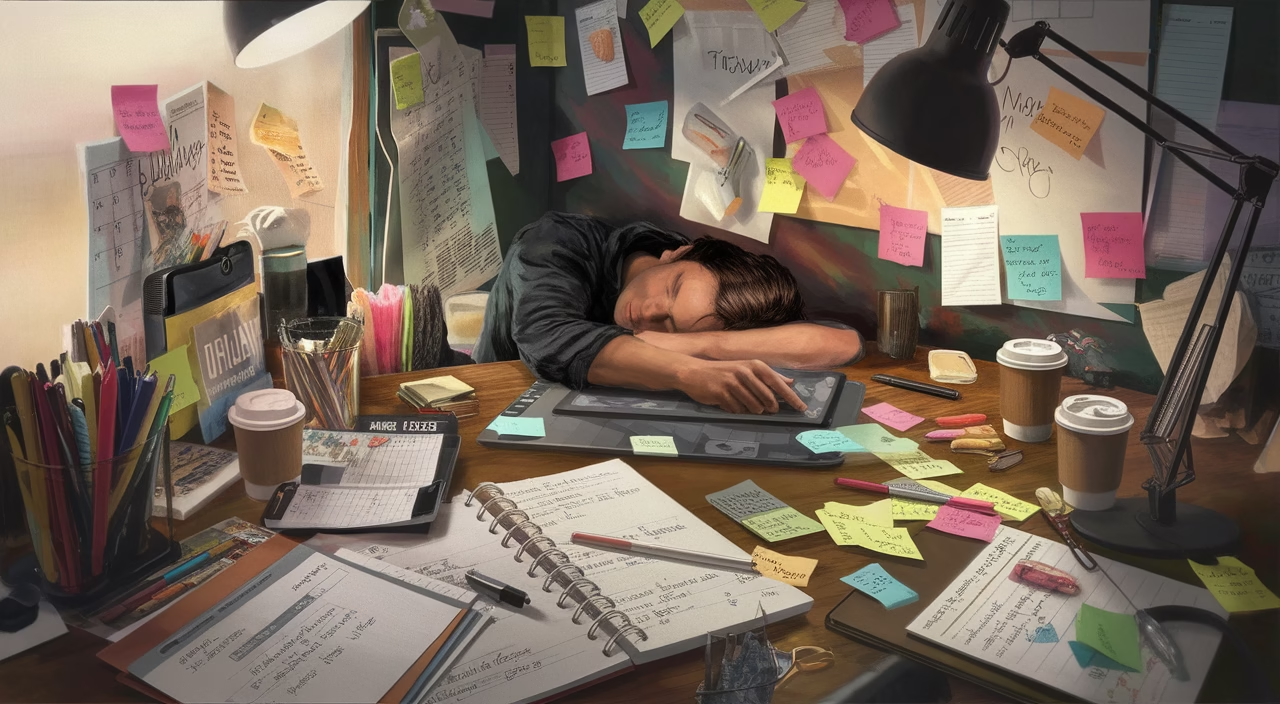
Finding Funny in the Frazzled: Coping Strategies for Burnout
Here’s the thing—you can’t fix burnout with a scented candle and a vision board. But you also can’t undo it by hate-scrolling on your phone until 3 a.m. So here are **stress management** options that lie somewhere in the middle of absurd and doable:
- Do One Stupidly Easy Thing: Like, drink water. Seriously. If you do this on purpose instead of by accident, you get a point.
- The Chaos Journal: Take five minutes to aggressively scribble whatever’s in your head. Spelling optional. Swearing encouraged.
- Task Roulette: Write your to-dos on scraps of paper. Pull one like it’s the Hunger Games. You only do that one.
- Low-Effort Movement: Stretch like an unbaked cinnamon roll once a day to remind your body it exists.
- Choose Your Boss Voice: Narrate your work in the voice of David Attenborough or a chainsmoker drag queen. Makes doing your taxes marginally bearable.
Each one of these is purposefully ridiculous, because laughter breaks the stress cycle—a concept totally backed by science and semi-regular nervous breakdowns. Funny **self-care tips** can redirect your mental GPS away from “meltdown imminent.”
The Art of Not Adulting: Self-Care Tips for When You Can’t Even
Most **self-care tips** assume you have the time, money, and emotional bandwidth of a minor deity. But what if brushing your teeth feels like filing taxes underwater? Welcome to millennial burnout care.
Low-effort self-care for the creatively dead inside includes:
- Letting dishes soak… indefinitely, and calling it a “mindful marination ritual.”
- Texting a meme instead of explaining your feelings. Emotional delegation, baby.
- Scheduling your sob-fest like a dentist appointment: “Tuesday. 7pm. Full existential collapse.”
- Switching to breathable fabrics because you deserve to overthink in comfort.
**Stress management** doesn’t look like a spa day when you’re fried—sometimes it’s just choosing not to open another browser tab of existential dread. These **work-life balance** strategies might not fix everything, but they’ll keep you functional enough to Netflix your way through Tuesday.
Surviving the Self-Doubt Spiral: Overcoming Anxiety and Overthinking
If you’ve ever rewritten an email 17 times before ultimately closing your laptop and walking into traffic (metaphorically… maybe), welcome to the brain spiral known as “**mental exhaustion** meets perfectionism.”
Anxiety and creative burnout are besties. They borrow each other’s hoodies and gaslight you into thinking you’re never doing enough. But here’s a dirty secret: some tasks don’t actually need to be done perfectly. Or today. Or by you.
**Coping strategies** for breaking the perfection paralysis include:
- Use the 70% rule — if it’s 70% good, it’s good enough. Perfection died in 2012. Let it go.
- Literally time your overthinking. You get 10 minutes to panic, then it’s decision-o-clock.
- Text a friend and say, “Tell me it’s okay not to be okay.” Because sometimes spill-resistant coffee mugs don’t apply to humans.
You might still overthink everything, but at least you’re doing it with awareness. That’s growth, baby. **Stress management** at its finest.

Laughing in the Face of Burnout: Reclaiming Your Mental Health
Creative burnout recovery isn’t a light switch. It’s more like trying to un-boil an egg with therapy and caffeine. But reclaiming your **mental exhaustion** doesn’t have to be dignified—it just has to work.
Here’s what unpredictably helps with **work-life balance**:
- Daily Existential Weather Report: “Today’s vibe is 70% ‘What’s the point?’ with a strong chance of resilience.”
- Giving Your Burnout a Name: Mine is Carl. Carl is a jerk. But he’s not in charge.
- Choosing Imperfect Action: Productivity isn’t the goal. Survival with a side of sarcasm is.
**Work-life balance** is a unicorn in this economy. But laughing—however dry, dark, or forced—regulates your nervous system in ways you probably won’t learn about on TikTok until two years from now.
If you’re still here, still burned out but breathing, that’s something. You haven’t fixed it, but you’ve named it, mocked it, and maybe even hydrated. That’s a win in the **stress management** playbook.
Cost Guide
- Low-energy coping materials: $0–$10 (journal, memes, cheap fidget toys)
- Internet therapy subscription: $40–$150 per month
- Burnout recovery time: 3 weeks to 9 months—depending on your life and how many “urgent” emails you ignore
- Laughter: Free. Slightly unhinged, but free.
Frequently Asked Questions
- What are early signs of burnout? Cynicism, zero motivation, trouble focusing, frequent meltdowns (internal or external), and random body aches.
- How long does burnout recovery take? It varies. Recovery isn’t linear—some people bounce back in weeks, others need months and therapy apprenticeships.
- Can I still work while burned out? Technically yes, but it’s like driving on a flat tire. Eventually, you’ll either stop or blow something important.
- What’s a quick fix for burnout? There isn’t one. But aggressively snacking and watching raccoon videos might buy you five mental minutes.
- Are naps a valid coping mechanism? They’re not just valid, they’re sacred. Naps are how your brain resets the weirdness buffer.
- Why do I feel guilty for resting? Late-stage capitalism. Also possibly childhood. Guilt is not evidence you’re doing something wrong, just that you’re different now.
- How do I get motivation back? Start stupid small. Turn on your laptop. Clap for yourself. Trick your brain into thinking inertia is cool.