What Exactly Do Creative Burnout Symptoms Feel Like?
Oh, you know the feeling. That dull ache behind your eyes, the one that whispers, “You’re not good enough.” It starts subtly, a forgotten deadline here, a half-finished project there. Then it snowballs. Suddenly, the very thought of creating, of putting pen to paper or pixel to screen, feels like dragging a piano uphill. Your muse has packed her bags, probably for a much nicer, less demanding creative, and left you with a stack of self-doubt. These aren’t just minor inconveniences; these are full-blown Creative Burnout Symptoms, and they’re here to steal your joy.
It’s that gnawing sense of fraudulence, isn’t it? That deep-seated Imposter Syndrome convincing you that every success was a fluke and every failure is proof you were never truly talented. You scroll through social media, seeing other “successful” artists, and the comparison monster rears its ugly head, feeding your Self-Doubt in Creativity. You used to create for the sheer thrill of it, but now it feels like a heavy, impossible obligation. Welcome to the club, friend. It’s a pretty miserable club, but you’re not alone.
TL;DR
- If the joy has drained from your creative pursuits, leaving you feeling hollow, exhausted, and deeply inadequate, you’re likely experiencing Creative Burnout Symptoms.
- This isn’t just a bad mood; it’s a persistent state born from the relentless pressure of creative industries, often fueled by insidious perfectionism and the pervasive whisper of Imposter Syndrome.
- You might feel like an Overwhelmed Artist, constantly battling Self-Doubt in Creativity, finding yourself frozen by the sheer magnitude of what you “should” be doing.
- Recognizing these signs is the first step toward reclaiming your spark. Learning to accept imperfection and actively work on Coping with Creative Blocks, rather than fighting them, is crucial.
- The path to Finding Inspiration Again involves shedding the heavy cloak of external expectations and embracing a raw, vulnerable honesty with yourself. It’s about being kind to the creative within, allowing for messy beginnings, and celebrating tiny victories, ultimately rediscovering why you started creating in the first place.
Embracing Imperfection: Dealing with Imposter Syndrome
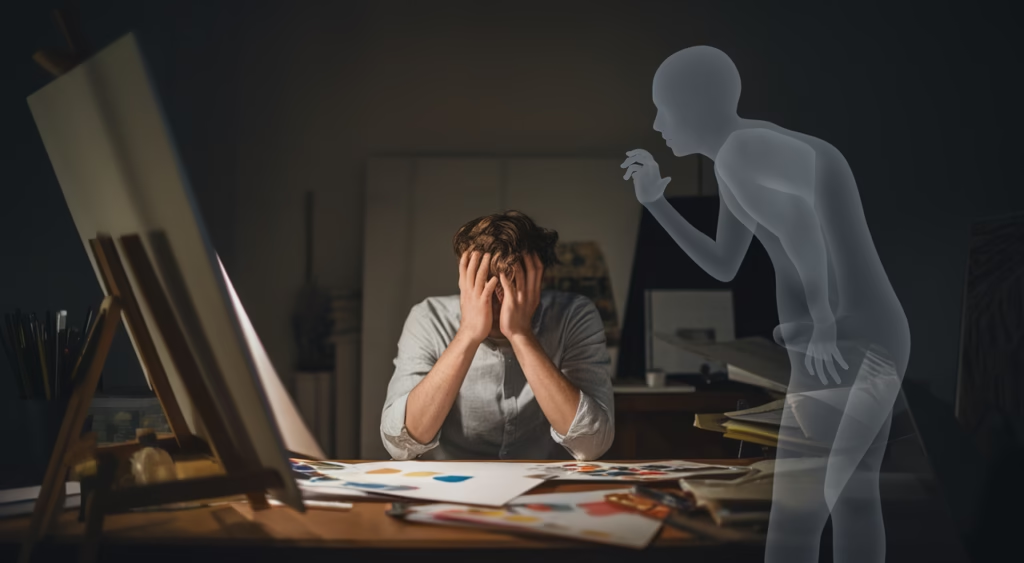
That little voice in your head, the one that tells you everyone else is doing it better, that you’re just faking it till you make it (and you’ll never make it)? That’s Imposter Syndrome, and it’s a ruthless little bastard. It thrives on perfectionism, whispering that if it’s not absolutely flawless, it’s garbage. We, as creatives, are especially susceptible because our work is often so personal, so intertwined with our identity. To start Dealing with Imposter Syndrome, you have to acknowledge its existence and understand its game. It wants you to stay small, to play it safe, to never risk failure. The “ingredients to avoid” are comparison and the myth of perfection. Comparing your raw, messy middle to someone else’s polished end result is a recipe for creative paralysis. What’s best is to celebrate the process, not just the product. How to choose to fight back? Start by consciously giving yourself permission to create something “bad.” Seriously. Just for the sake of creating, without any external judgment or internal critic.
The Weight of Expectations: Overcoming Creative Blocks
The pressure in creative industries is immense. You’re an Overwhelmed Artist, constantly bombarded by deadlines, client demands, and the internal monologue that screams, “Innovate or die!” When you hit those dreaded creative blocks, it feels like a personal failure, further fueling your Self-Doubt in Creativity. Coping with Creative Blocks isn’t about forcing it; it’s about understanding why they’re there. Often, they’re a signal from your exhausted brain and soul crying out for a break. “Safety tips” here involve setting ruthless boundaries. Say no to projects that don’t light you up. Schedule non-negotiable downtime. What’s best for you might be a walk in nature, staring at a wall, or simply doing something utterly non-creative. How to choose to break free? Experiment. Try freewriting, doodling without purpose, or consuming art purely for enjoyment, not analysis. The “results timeline” for overcoming blocks isn’t instant; it’s a gradual thaw, a slow rekindling of embers.
Finding Light in Darkness: Coping with Burnout
When you’re deep in the trenches of creative burnout, it feels like there’s no way out. Every creative endeavor feels like a monumental task, and the joy is long gone. Coping with Burnout is less about finding a magic bullet and more about a holistic shift in your approach. We often treat ourselves like machines, forgetting that creativity is a human endeavor, deeply tied to our emotional and physical well-being. “What’s best” is a radical act of self-care: adequate sleep, nourishing food, genuine connection, and movement. Avoid the “ingredients to avoid” like constant overworking, ignoring your body’s signals, and believing you always have to be “on.” “Safety tips” include talking to a trusted friend or mentor about your struggles – validation is a powerful antidote to isolation. Understand that the “results timeline” for recovery is not linear; there will be good days and bad. Be patient with yourself. It’s a journey, not a destination, to truly start Finding Inspiration Again.
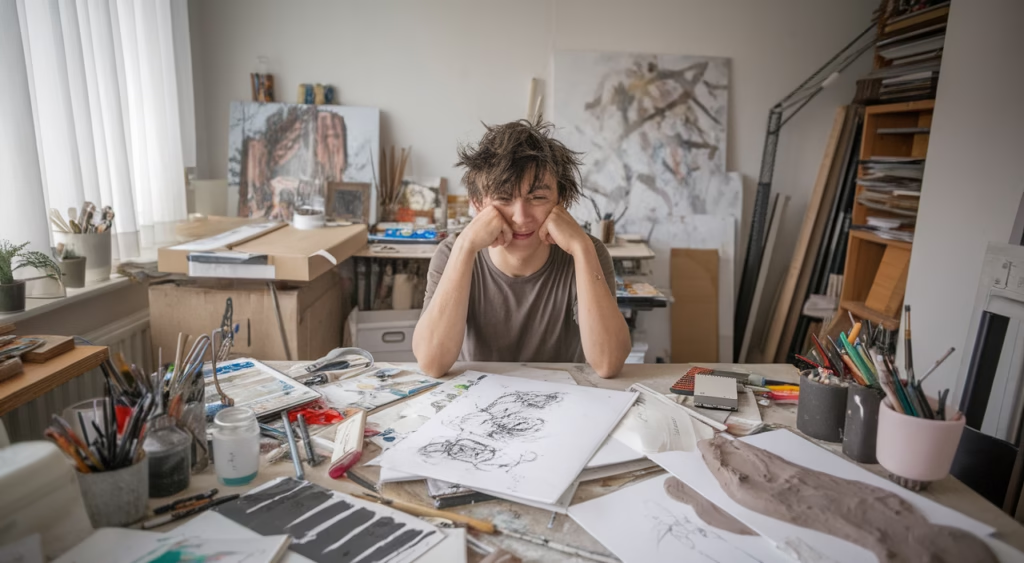
Embracing Vulnerability: Rediscovering Inspiration
This is where the real magic happens. After navigating the depths of Creative Burnout Symptoms, the path to Finding Inspiration Again isn’t about chasing external validation or trying to replicate past successes. It’s about a raw, vulnerable re-engagement with your inner world. Embrace the messiness. Allow yourself to be seen, not just the polished version, but the struggling, imperfect artist. This radical self-acceptance is the antidote to Imposter Syndrome and the key to unlocking new creative wells.
Final Thoughts
The journey through creative burnout is a brutal one, but it can also be a profound catalyst for growth. By confronting our Imposter Syndrome, learning to set boundaries, and embracing our inherent imperfection, we can shed the heavy burdens that stifle our creativity. Rediscovering Inspiration is not about finding it outside ourselves, but remembering the spark that was always there, waiting to be acknowledged with kindness and vulnerability.
Frequently Asked Questions
- What are the earliest signs of Creative Burnout Symptoms?
The earliest signs often include persistent fatigue, a lack of enthusiasm for projects you once loved, increased procrastination, feelings of inadequacy (Imposter Syndrome), and a general sense of being overwhelmed by creative tasks. - Can Imposter Syndrome really lead to creative burnout?
Absolutely. Imposter Syndrome fuels perfectionism and self-doubt in creativity, leading to excessive overthinking, constant self-criticism, and an inability to complete work, which are major contributors to creative burnout. - How long does it typically take to recover from creative burnout?
There’s no fixed “results timeline.” Recovery is highly individual and depends on the severity of the burnout and the strategies you employ. It can take weeks or even months of consistent self-care and boundary-setting. - Are there any quick fixes for Coping with Creative Blocks?
While there are no true “quick fixes,” sometimes a change of scenery, engaging in a completely different activity, or simply resting can offer a temporary reprieve. However, addressing the root causes (like burnout or imposter syndrome) is essential for long-term relief. - What’s the best way to start Finding Inspiration Again after burnout?
Start small. Engage in low-pressure creative activities just for fun, without any goals or expectations. Revisit old hobbies, consume art from diverse fields, and prioritize self-care to replenish your mental and emotional reserves. Embracing vulnerability in your process helps immensely. - Should I avoid all creative work during burnout recovery?
Not necessarily all creative work, but definitely high-pressure, client-driven, or goal-oriented creative work. Focus on playful, low-stakes creative expression that doesn’t trigger your perfectionism or imposter syndrome.