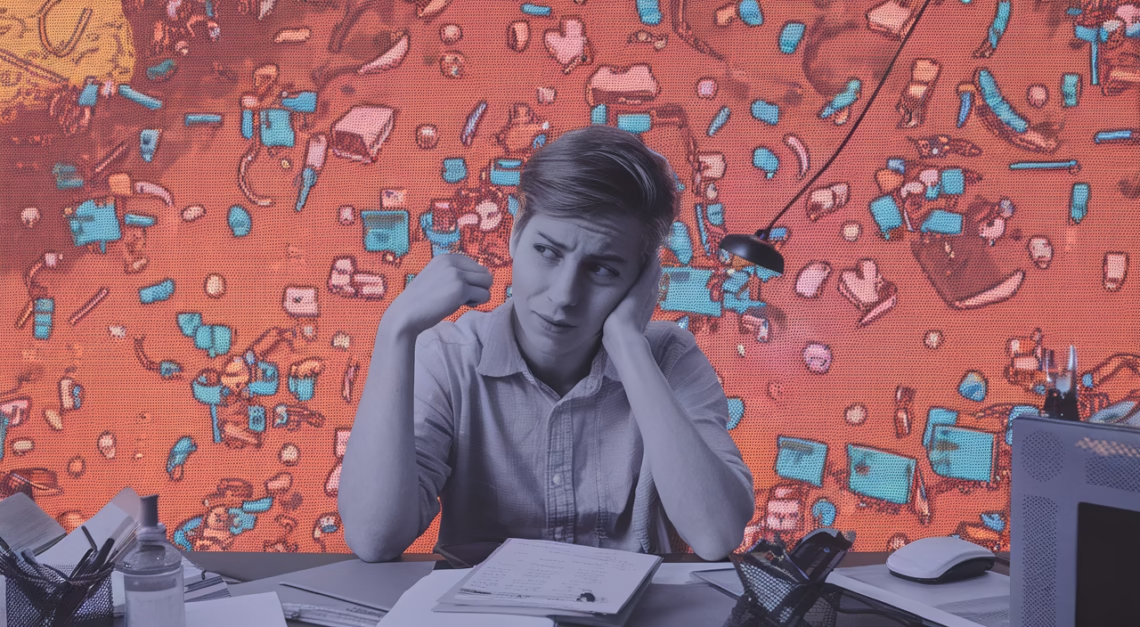
It’s not just you. Yes, you—the one who dreads replying to texts from four days ago and needs a nap after one hour of ‘friendly’ mingling at work. The reason you feel utterly wiped after social interactions isn’t because you’re defective. It’s called emotional fatigue—and it’s deeper than being antisocial or introverted. It’s your nervous system waving a little white flag, begging for stillness in a world that demands nonstop connection. This is the psychology behind social exhaustion, and understanding it changes everything about how you navigate your relationships and energy.
TL;DR – What you need to know
- Introvert or not: Feeling drained after socializing is often a nervous system response, not a personality flaw.
- Burnout compounds social fatigue: Emotional depletion from work, overstimulation, and over-obligation makes it worse.
- Overthinking is a silent energy vampire: Your brain can’t decipher threat from a group dinner versus a saber-toothed tiger.
- Authenticity is key: Pretending to be fine when you’re spiraling eats more energy than being messy but real.
- You’re not broken: You’re holding more emotion, sensing more nuance, and that takes a toll—all valid, all human.
Understanding the Mess Inside: The Psychology of Social Exhaustion
Let’s be honest—your internal monologue after a social event sounds like a roast from your worst critic. “Why’d you say that? You hugged them for too long. Did you laugh too hard?” Multiply that by the 30 micro-decisions you made in two hours and *ding ding ding*—we have a depleted contestant.
But here’s the psychological kicker: your brain registers every interaction, especially in high-stress or inauthentic environments, as a potential threat to identity safety. When you’re not fully comfortable being yourself—or are constantly adapting to other people’s needs—you enter what’s known as a fawn response.
Fight or flight gets all the attention, but fawning (aka people-pleasing survival mode) is sneakier. You smile when you want to cry. You nod when you’re screaming inside. And because the threat isn’t physical but emotional, you walk away not with a black eye—but with haunting exhaustion. This is embracing inner chaos in its rawest form—recognizing that your emotional responses are valid reactions to psychological pressure.
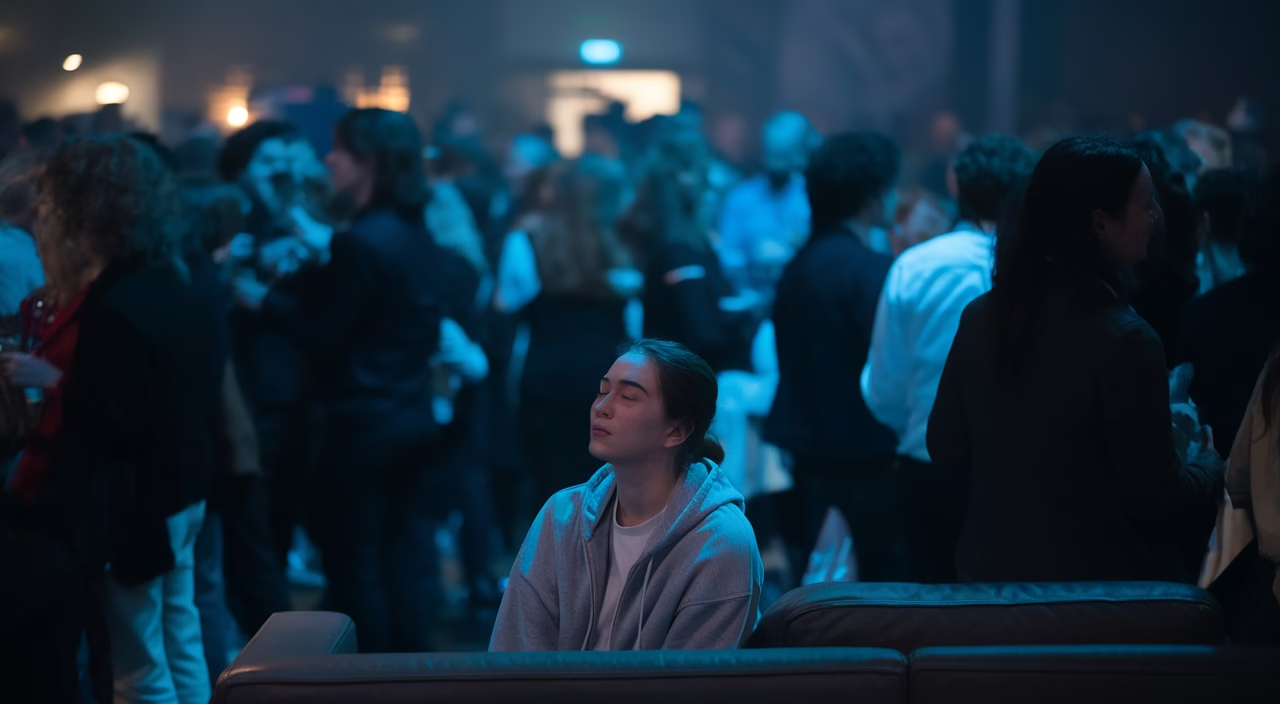
Coping with Overthinking and Anxiety in Social Settings
If you’ve ever walked out of a perfectly normal interaction and spent the next three hours replaying your ‘weird laugh’ on loop in your mind—you’re not alone. Coping with overthinking isn’t about learning to never spiral. It’s about learning how to notice when you are.
Dealing with anxiety in everyday social chaos means recognizing you’re exhausted not just because you went to brunch, but because during brunch you:
- Wondered if your silence meant you were boring
- Second-guessed that one dumb joke you made
- Tracked everyone’s mood to make sure no one was upset with you
- Felt like you didn’t belong but smiled anyway
Welcome to mental multitasking hell. The mind wrestles itself and always loses.
Real talk: judgments are inevitable. But most of that fear comes from internalized self-rejection. When you feel your worth is tied to being liked or making others comfortable—every social encounter becomes a test. And honestly, no wonder you’re fried. You’re taking an emotional SAT at every dinner party. This authentic self-reflection reveals how much energy we waste performing instead of simply being.
Finding Hope in the Chaos of Social Overwhelm
Plot twist: you don’t need to fix your mess. You need to learn how to dance with it.
Hope doesn’t show up in rigid routines or perfectionism. It creeps in when you’re curled up in yesterday’s hoodie, acknowledging, “Yeah, I’m overwhelmed. But I’m still here.” That self-dialogue? That’s resilience.
Finding hope in chaos begins when you stop treating your burnout as an enemy to slay and start seeing it as a signal to pause. If you’ve been living your social life on ‘performance mode’—it’s time to log off. Cancel the coffee catch-up you’re dreading. Be honest about needing rest. Find people who don’t exhaust you by expecting only the ‘fun’ version of you.
Spoiler alert: you are the hope already. Even if you’re lying on the floor eating cereal from the box while contemplating your existence. This is where embracing inner chaos becomes transformative—when you stop fighting your nature and start honoring it.
Embracing Vulnerability and Growth Through Social Fatigue
Burnout doesn’t just torch your to-do list—it burns down doors you never thought you’d open. Like the one that leads to emotional honesty. To growth. To dropping the cloak of endless cheerfulness and being like, “Yeah, I’m kinda losing it.”
True vulnerability and growth isn’t weakness. It’s liberation. It allows you to say things like:
- “Honestly, I’m feeling really overwhelmed lately.”
- “I care about you, but I don’t have the energy to hang out.”
- “I’m still figuring things out—and that’s okay.”
Growth doesn’t come in those shiny Instagram quotes. It sneaks in when you choose rest over guilt, boundaries over burnout, and self-acceptance over shame. We heal not by becoming a better version of ourselves, but by accepting the version that’s already hurting through authentic self-reflection.
You don’t need a 30-day gratitude challenge. You need space to cry, laugh, rage—without apology. You’ll be shocked how much lighter you feel when you stop hiding your truth under people-pleasing smiles.

Final Thoughts: The Art of Embracing Inner Chaos
You’re not too much. You’re just too tuned in. And in a numbed-out world, that’s a superpower—even if it costs energy.
Embracing your inner chaos isn’t about finding peace instantly. It’s about acknowledging the storm, pulling up a lawn chair, and learning to sit with it like an old, slightly dysfunctional friend. Some days, you’ll spiral with overthinking. Some nights, you’ll replay every word you said while dealing with anxiety. And guess what? You’re still worthy. Still whole. Still human.
Here’s your permission slip to feel. To rest. To not always engage. You don’t have to earn rest by being productive. Or be perfect to be lovable. You’re allowed to exist as you are—especially when you’re a glorious, anxious mess. That mess? It’s yours. And through vulnerability and growth, it might just be beautiful. Finding hope in chaos starts with accepting that social exhaustion isn’t a bug—it’s a feature of being deeply human.
Frequently Asked Questions
- Why do introverts feel more drained after socializing?
Because they’re more sensitive to stimuli and often require solitude to recharge. But even extroverts can be socially fried—especially under stress. - Is it normal to overthink after conversations?
Completely. It stems from anxiety and the internal pressure to perform or be liked. - How do I stop spiraling after hanging out?
Shift focus. Ground yourself physically (movement, touch). Remind yourself that no one analyzes you the way you think they do. - Can embracing your mess really help?
Yes. Accepting your humanity allows deeper self-compassion, which reduces internal tension and emotional exhaustion. - How do I build friendships that don’t drain me?
Look for mutual understanding, low-pressure dynamics, and emotionally mature people who allow you to show up imperfectly. - Is social anxiety the same as being socially exhausted?
Nope. Social anxiety is fear-based; social exhaustion is energy-based. Though often tangled, they’re rooted differently. - What’s one small thing I can do today?
Say no to just one thing that doesn’t feel right. See how your body softens when you honour your energy.